Food Stories · Tampico, Mexico City & the restaurant table
Tampiqueña: Steak, a Restaurant, and a Place-Name
A name can point toward a port while a restaurant account leads elsewhere. Follow the records behind carne a la tampiqueña, the changing accompaniments, and the steak you can cook at home.
Begin with the version you want to cook
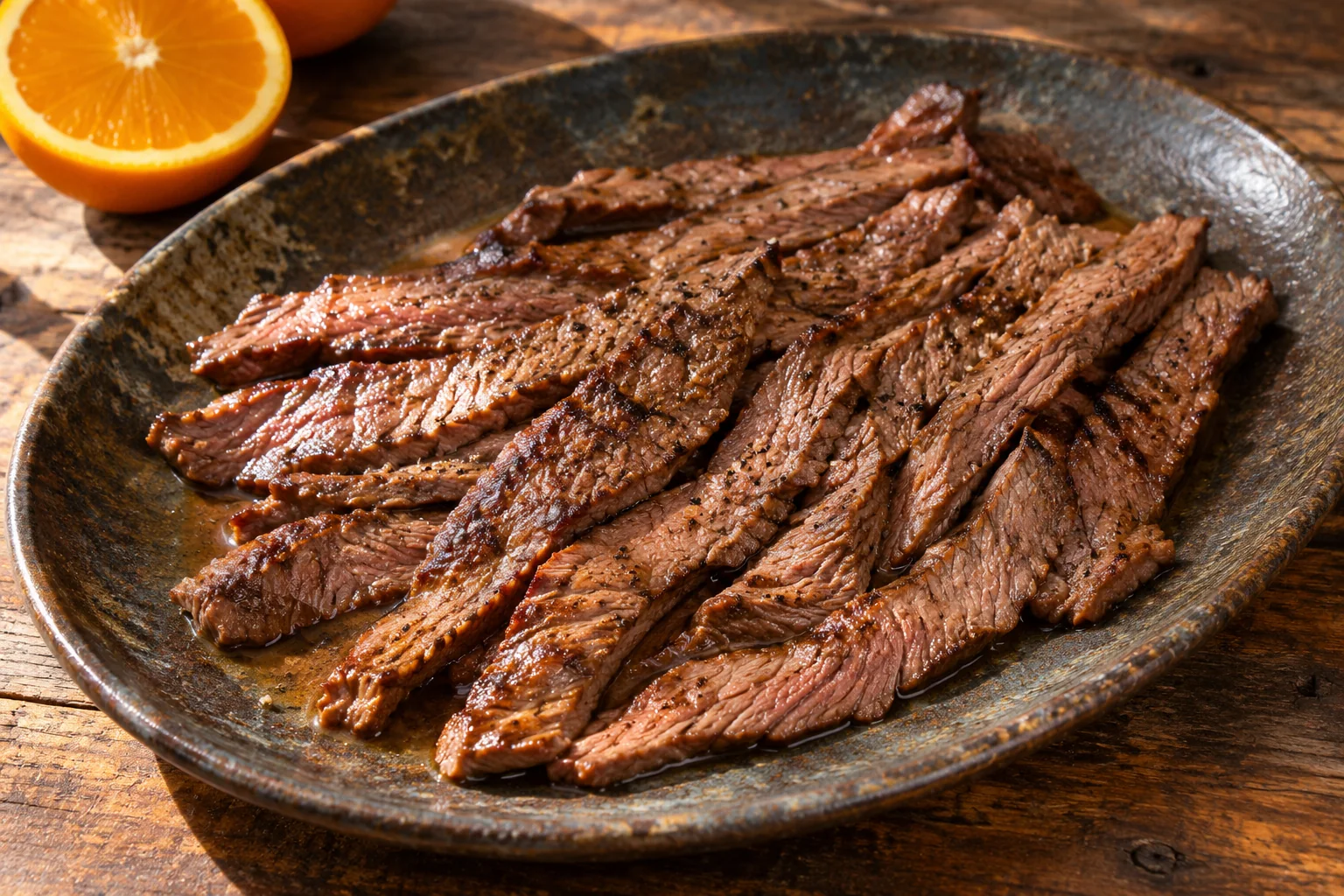
Our Carne Asada a la Tampiqueña preserves the founder’s 2021 recipe for thin flank or skirt steak seasoned with citrus, salt, and pepper, then cooked on a lightly oiled flat top. It gives you the steak component. The familiar restaurant dish often brings several preparations together on one plate, and those accompaniments are part of what makes its story worth following.
Keep the recipe open when shopping and cooking. The history here explains names, people, and serving choices; the complete recipe supplies the quantities and method for this particular version. The Tamaulipas atlas follows the river and market setting behind the port in the name.
The restaurant accounts lead to Mexico City
Sarabando’s published Loredo family history dates the establishment of the Tampico Club in Mexico City to 1939. It names José Inés Loredo and Fidel Loredo, in partnership with Manuel Suárez, and credits that kitchen with carne asada a la tampiqueña. Its later chronology follows the family’s restaurants into Tampico. Read the family’s account.
Larousse’s culinary dictionary also connects the dish with José Inés Loredo and a Mexico City Tampico Club, but gives 1941 for the restaurant’s founding. Its entry relates the dish to the Huasteca practice of serving grilled meat or cecina with enchiladas and beans. Read the dictionary entry.
The opening years differ. These accounts support a Mexico City restaurant connection, but do not settle a single chronology here. The restaurant name, its family history, and a regional association each tell you something different. A dish can carry a place-name through the work and movements of cooks and restaurateurs; the name alone is not a dated record of its invention.
The accompaniments are part of the identity
Sarabando’s online menu lists beef tenderloin with guacamole, beans, Huasteca cheese, green enchiladas, and poblano strips. That is one restaurant’s published description of a composed meal. It gives a concrete comparison for the steak-only recipe on this site. See the restaurant’s menu description. The menu is evidence of that listed preparation, rather than a promise about a future visit or a reproduction of the earliest serving.
Larousse describes changes across restaurant versions: the enchiladas may have red, green, or mole sauce, and the beans may be brothy or refried. Its discussion also notes earlier brief citrus seasoning of the meat and later changes in preparation. The useful lesson for a cook is to identify the whole version before combining its parts.
Compare the main ingredient, sauce, bean preparation, and garnishes when reading a menu. A thin steak with a green enchilada and brothy beans makes a different meal from one with red enchiladas and refried beans. Neither menu description changes the ingredient list of the recipe you have chosen to make.
Tampico belongs to a wider Huasteca table
Tamaulipas’s state culinary overview includes carne a la tampiqueña among its emblematic dishes. It also identifies Tampico with stuffed crab, crab salpicón, seafood soups, and shrimp preparations. The beef dish belongs within that broader regional account. Explore the state’s culinary overview.
Mexico’s cultural information system describes three influences across Tamaulipas: the southern Huasteca, the Gulf’s fish and seafood, and the northern border’s meat traditions. Its examples include corn bocoles and Tampico’s stuffed crab. Read those as a regional survey, with differences inside the state. Read the cultural profile.
Continue through the atlas’s Tampico river chapter, market account, and Huasteca context. Reynosa’s border setting and Tampico’s southern Gulf setting each need their own records, even when both appear within one state.
Follow the cut and method in the home recipe
The founder’s archived version specifies thin flank or skirt steak. Its ingredient line uses orange juice, while the method also allows lime. Its short flat-top sequence belongs to that thickness and cut. The restaurant menu’s tenderloin is a comparison to understand, rather than a substitution instruction for this recipe.
The skirt-steak guide helps you identify one of the cuts named in the recipe. For the seasoning amount, portion dimensions, cooking temperature, and rest, follow the complete Tampiqueña recipe. Choosing a cut and following its complete method together is more useful than assuming every dish called carne asada cooks in the same way.
Make the supporting dishes their own choices
Choose Mexican Rice, Refried Beans, or Classic Guacamole if they suit your table. Each is a complete preparation with its own ingredients. Our Texas Cheese Enchiladas with Red Chile Sauce offer a separate enchilada option; their sauce is different from the green enchiladas named on Sarabando’s menu.
The Texas Combination Plate story follows a different restaurant record and serving format. Read the two stories together to compare how a main dish and accompaniments become a named meal. The individual sources establish each account; sharing a plate does not by itself establish a common inventor or a direct line of descent.
Return to the Tamaulipas atlas for the place, or to the Carne Asada story for another set of grilled-beef traditions. Then cook the particular recipe you chose.
Sources and further reading
- Sarabando: the Loredo family’s restaurant history — the family account gives 1939 for the Mexico City Tampico Club.
- Larousse: Carne a la tampiqueña — its restaurant chronology gives 1941; its serving descriptions show variation.
- Sarabando: Comidas y Cenas — a published menu comparison, without a price or availability claim.
- Government of Tamaulipas: Gastronomía — the wider state food record.
- Secretaría de Cultura: Tamaulipas food profile — regional influences and named preparations.
Research reviewed 9 November 2026. The founder’s recipe remains its own archived preparation. Suggest a correction · Browse Food Stories.