Food Stories · Lime, ice & two places
Classic and Frozen Margaritas: Lime, Ice, and Dallas
A fresh-lime drink over one large cube and a smooth limeade blend lead to different chapters: a printed cocktail, a Dallas restaurant machine, and the agave landscape of Jalisco.
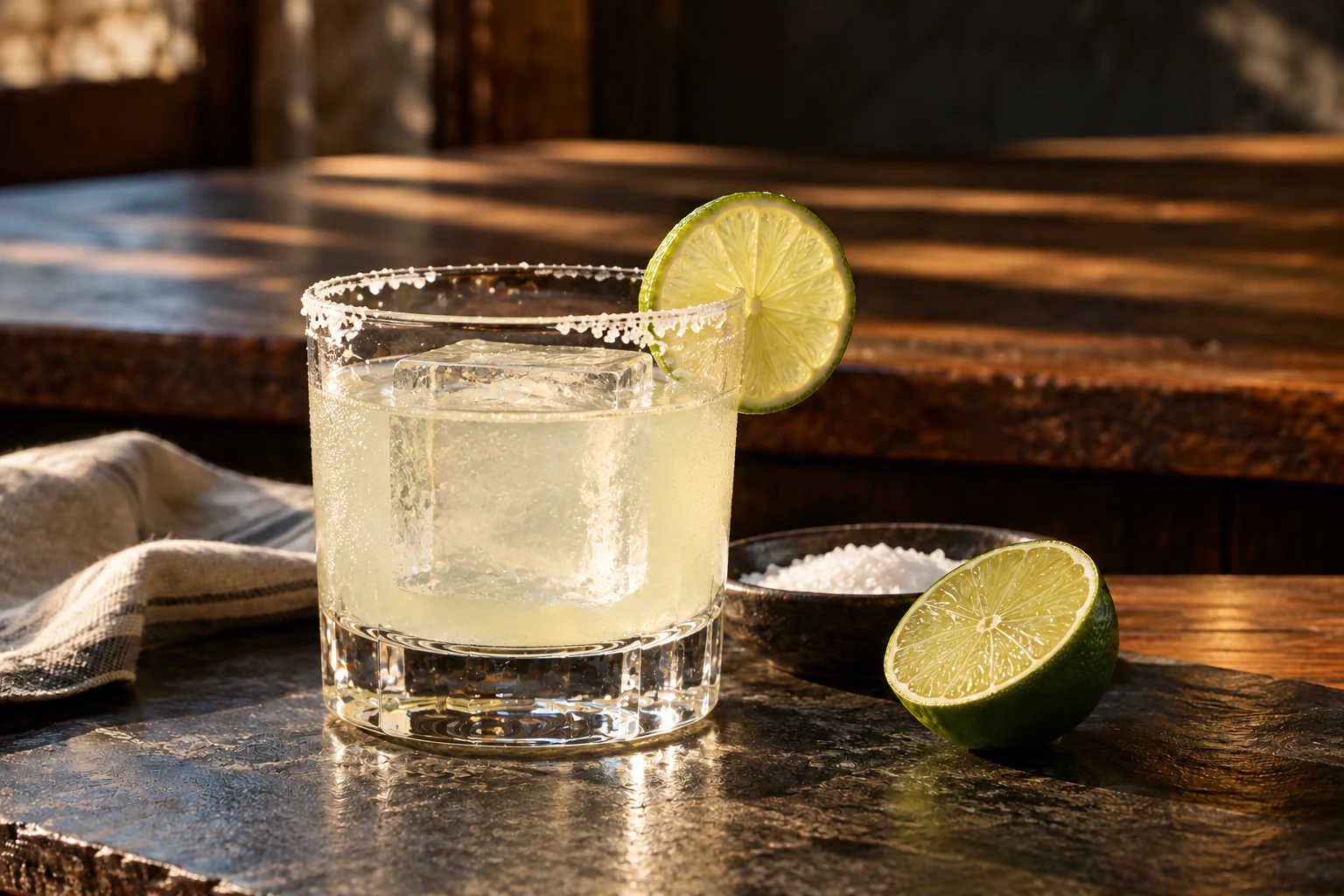
Two complete recipes, two ways to serve
For a shaken drink with freshly squeezed lime, choose our Classic Margarita. It serves one in a lowball glass over a large square cube. For a blender drink built around frozen limeade concentrate, choose our Frozen Margarita. That recipe makes four servings and comes from the owner’s earlier recipe collection and a supplied scan.
The difference begins before either glass reaches the table. One method strains a shaken liquid over ice; the other blends ice into the drink. The ingredient lists differ too. Use the complete recipe for the version you want, rather than treating the frozen recipe as the Classic with extra ice.
A tequila-and-citrus formula in the 1937 record
The 1937 Café Royal Cocktail Book, compiled by W. J. Tarling, includes a drink called the Picador. Its ingredients are tequila, Cointreau, and fresh lime or lemon juice, shaken together. Tequila takes half the formula; the liqueur and citrus take a quarter each.
That printed entry is useful because it gives a dated comparison for the Margarita’s familiar combination of agave spirit, orange liqueur, and citrus. It names the drink Picador. It does not identify a Margarita inventor, prove where the later name began, or establish that every similar drink descended from this page. The recipe record and an origin story answer different questions.
For this history, the firm reference points are the printed preparation, a modern bartenders’ specification, and the museum’s account of the Dallas machine. They let us follow the drink without choosing a single birthplace from competing stories.
The fresh-lime recipe and the large cube
The International Bartenders Association’s Margarita specification uses 100% agave tequila, triple sec, and freshly squeezed lime juice. It calls for shaking with ice, straining into a chilled cocktail glass, and an optional half salt rim.
Our Classic Margarita follows those drink proportions. The owner chose a lowball glass and one large square cube for the serving shown here. The IBA’s glassware and that on-the-rocks presentation are two distinct finishes. The recipe explains both; its measurements stay with the complete method.
Fresh juice matters to this particular formula because that is the citrus ingredient it specifies. The lime guide leads back to both drinks, while Dish DNA’s Margarita comparison follows their different forms.
Dallas changed the way a frozen drink could be served
The Smithsonian’s 2012 food-exhibition account says blended frozen Margaritas were popular in the 1950s. Its Dallas chapter comes later: in 1971, restaurateur Mariano Martinez found that ordinary blenders produced an inconsistent drink. Inspired by the Slurpee machine, he worked with chemist John Hogan to adapt a soft-serve ice-cream machine for Margarita slush.
This is a story about a restaurant’s equipment and consistency. Frozen drinks already existed; the machine supplied a different way to prepare them for service. Follow the Dallas atlas to place that chapter alongside the city’s other Mexican American restaurant histories.
UNT Libraries Special Collections also preserves a Mariano’s Mexican Foods menu in the Frank Cuellar Sr. Collection. Its catalogue identifies the Gaston Avenue restaurant and records its opening in 1971. The menu’s own catalogue date is open-ended, so the restaurant’s opening year should not be read as a verified printing date for that artifact.
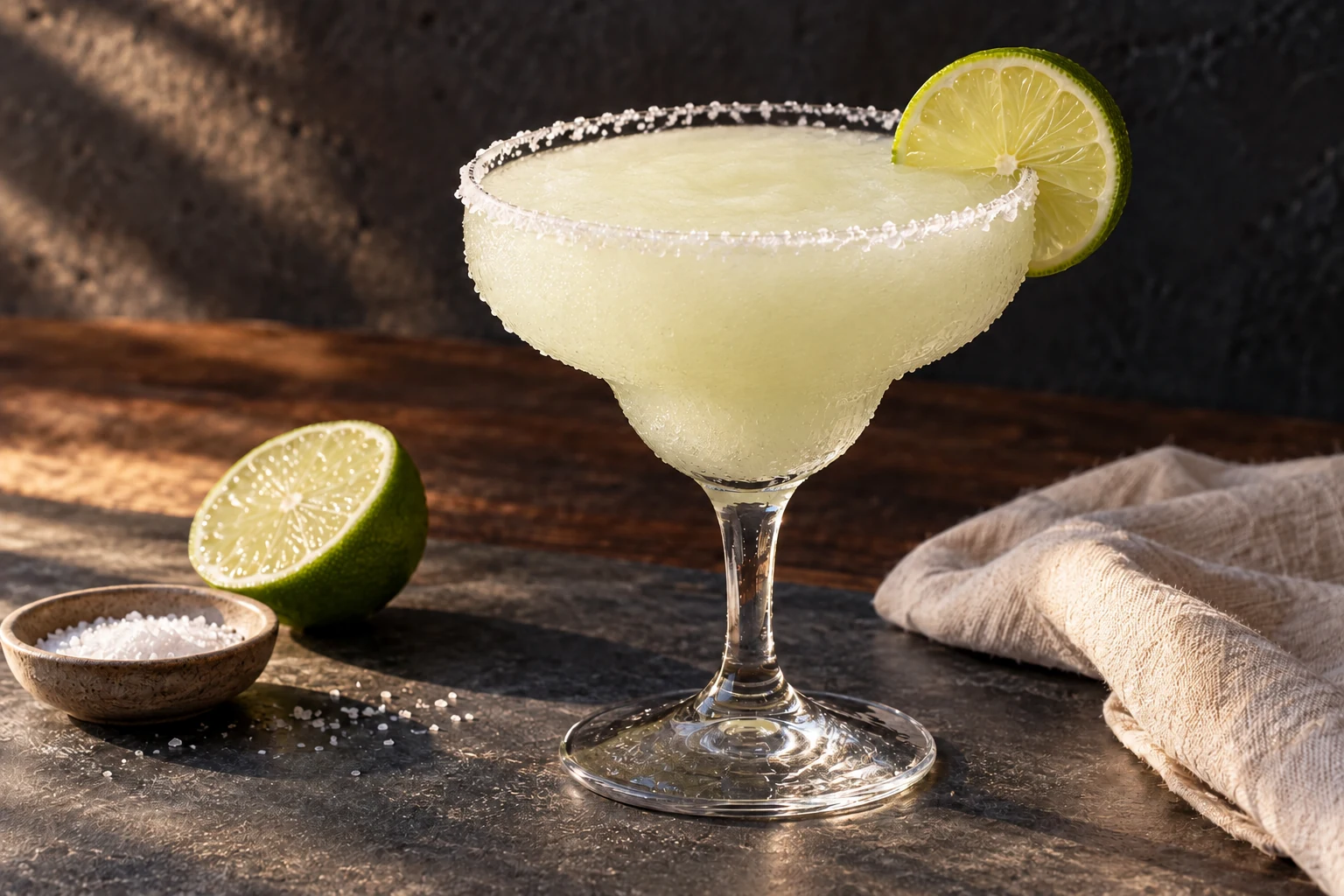
Our frozen recipe belongs to a home collection
The Border Table’s Frozen Margarita carries forward the owner’s “Magnifico Margarita” base: a six-ounce can of frozen limeade concentrate with equal three-ounce measures of tequila and orange liqueur. Those measurements appear in the owner’s 2021 site collection. A later supplied scan, headed “Magnifico Margarita” on page 35, adds the optional olive garnish; the page explains the sources and its practical blender guidance.
It is a home blender recipe with its own record. The Dallas machine history gives it a useful restaurant connection, but does not make it Mariano Martinez’s formula. Its limeade concentrate also distinguishes it from the fresh-juice Classic.
Follow the recipe’s gradual ice adjustments and its small splash of water if the blender stalls. Those instructions describe how to reach a smooth slush in different blender jars. They belong to this recipe’s method; a photograph alone cannot supply the liquid-to-ice balance.
Jalisco gives the tequila a landscape
The Consejo Regulador del Tequila describes tequila production through blue Agave tequilana Weber: the plant’s hearts are cooked, their juices fermented, and the resulting liquid distilled within the requirements of the protected designation. That production gives the spirit a specific plant and regulated geographic setting.
UNESCO’s Agave Landscape and Ancient Industrial Facilities of Tequila, inscribed in 2006, brings cultivated fields, working distilleries, and settlements including Tequila, Arenal, and Amatitán into view. It is a living landscape of agriculture and production. The Jalisco atlas follows that setting in more depth.
This regional connection concerns the spirit in both recipes. It does not identify the Margarita’s birthplace or turn the cocktail itself into a UNESCO inscription. Dallas helps explain a serving technology; Jalisco helps explain the tequila behind the drink.
Return to the glass, then follow the place
Make the fresh-lime Classic Margarita for one, or the Frozen Margarita for four. Keep the complete recipe beside you for measures, optional garnishes, and method.
Continue through Dallas for the restaurant and machine chapter, and Jalisco for the tequila connection. Explore limes, compare the drinks in Dish DNA, or choose another Food Story.
Sources for the Margarita story
- W. J. Tarling, Café Royal Cocktail Book, Coronation Edition, 1937 — Picador entry in the EUVS/Mixellany digital facsimile, reader page 146.
- International Bartenders Association: Margarita — modern specification and presentation.
- Smithsonian, “Beyond Salsa,” 19 November 2012, page 2 — frozen drinks before the Dallas machine, and Martinez’s work with John Hogan.
- UNT Digital Library: Mariano’s Mexican Foods menu — archival catalogue and its date qualification.
- Consejo Regulador del Tequila: Our Tequila — blue agave and production.
- UNESCO: Agave Landscape and Ancient Industrial Facilities of Tequila — the Jalisco cultural landscape and 2006 inscription.
The Frozen Margarita page identifies the owner’s 2021 recipe and later supplied scan separately. The scan does not establish its book title or author. These sources support the specific connections above without resolving a single Margarita inventor.
Send a correction · Find a recipe · Browse the Culinary Atlas