Food Stories · The Border Table
Corn Tortillas: Maize, Masa, and the Work of the Comal
A small tortilla connects a crop to a mill, a cook and a meal. Follow the steps behind its flexible surface, then press a batch for your own table.
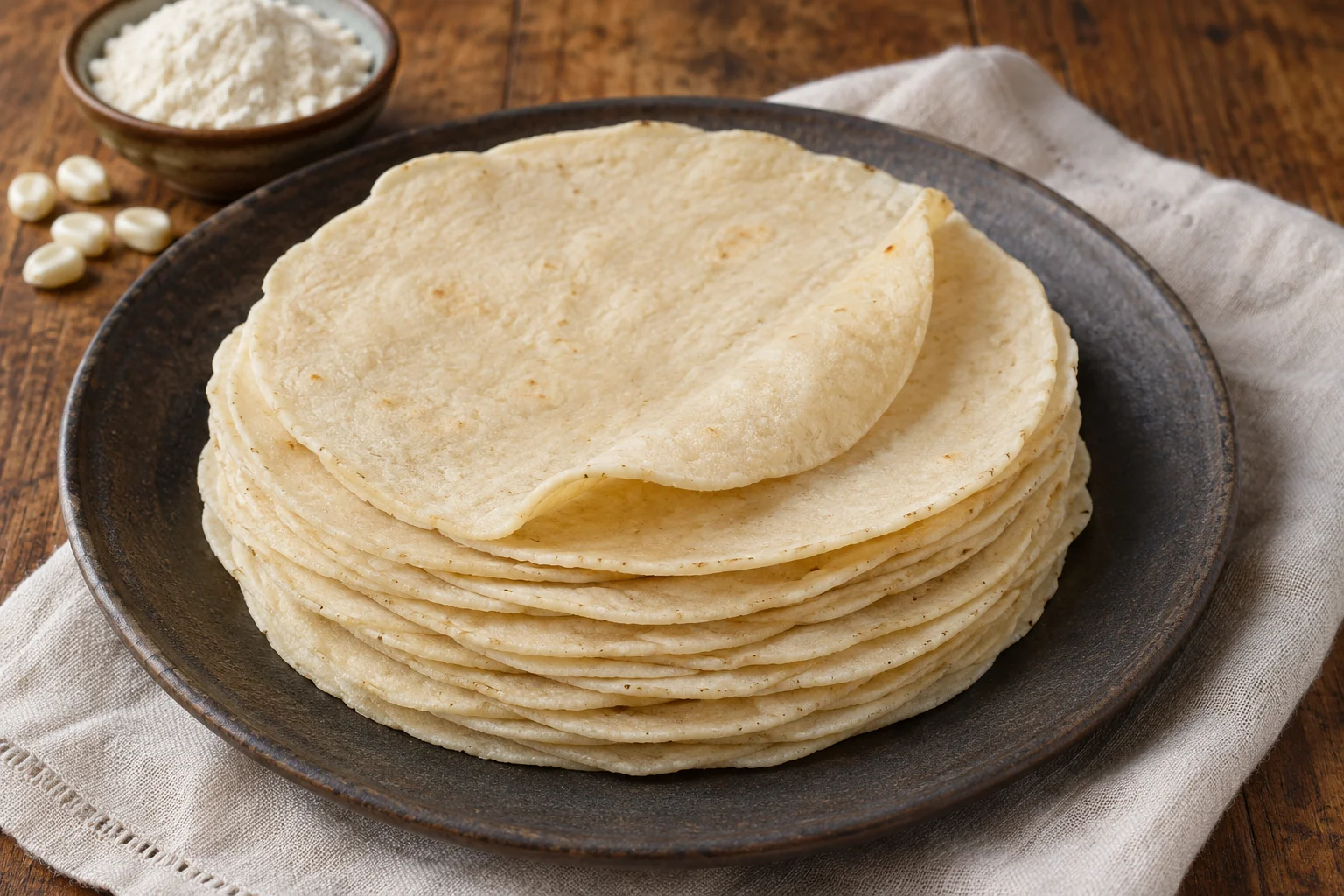
Begin before the flour reaches the bowl
The tortilla begins with maize, but ordinary ground corn cannot do the same work as masa harina. Secretaría de Agricultura’s 2025 explanation follows nixtamalization: cooking maize with food-grade lime and water, resting it, then milling the treated grain into masa. The flour in our recipe is made from corn that has already undergone that processing.
That distinction changes what to buy. Cornmeal may look similar in a bag, yet it does not make the same cohesive dough with water. Read the ingredient name before trying to solve a broken tortilla by adding more liquid.
A named cook in Topilejo
Agricultura introduces Angelina Espinoza Fuentes, a maize and tortilla producer in San Miguel Topilejo, Tlalpan, Mexico City. Its accompanying program follows the transformation from grain to tortilla in her kitchen. That is a specific place to begin exploring a much wider practice, rather than a claim that tortillas began in the capital.
Continue to the Mexico City atlas for the agricultural communities as well as the urban food table. The route makes room for the people supplying and preparing food, beyond the restaurant serving the finished taco.
The knowledge and labor behind a stack
In UNAM Global’s interview, researcher Gerardo Torres Salcido discusses women’s work in selecting maize, preparing nixtamal, grinding and shaping tortillas. He also describes changes brought by mills and tortilla-making machinery. A tortilla is therefore a record of work and knowledge as well as an accompaniment.
Fresh masa and dried masa harina offer different starting points. Our masa harina guide helps identify the product used in the recipe. In the Michoacán atlas, follow the broader relationships among maize, farming, cooks and community traditions.
Read the tortilla through your hands
The home recipe brings your attention to three things: the edge of a pressed round, the moment it releases from the comal, and the warmth held in the covered stack. A deeply cracked edge asks for a moisture adjustment before cooking. A burnt patch asks for a heat adjustment. Neither is repaired by adding more filling.
Cook Homemade Corn Tortillas, then put them beside Beef-Cheek Barbacoa or choose a sauce from Restaurant-Style Salsas. For another grain and dough, read the Flour Tortilla story. Each recipe keeps the ingredient and technique suited to that tortilla.
Sources and further reading
- Rick Bayless: Corn Tortillas — Practical comparison for hydration, pressing, turning and wrapping; this page uses its own batch size and instructions.
- Secretaría de Agricultura: Del maíz a la tortilla — Nixtamalization and the named Topilejo practitioner.
- UNAM Global: Las mujeres y la elaboración de la tortilla — Gerardo Torres Salcido’s account of labor, milling and masa harina.
Have a source or cooking detail to add? Send a correction.