Food Stories · Tortillas, eggs & Austin breakfast tables
Migas and Cisco’s Skillet Eggs: Austin Breakfast Tables
Small pieces of tortilla change a pan of eggs. Follow two complete home preparations, the wider meanings of migas, and the Austin records that place Cisco’s within a neighborhood food story.
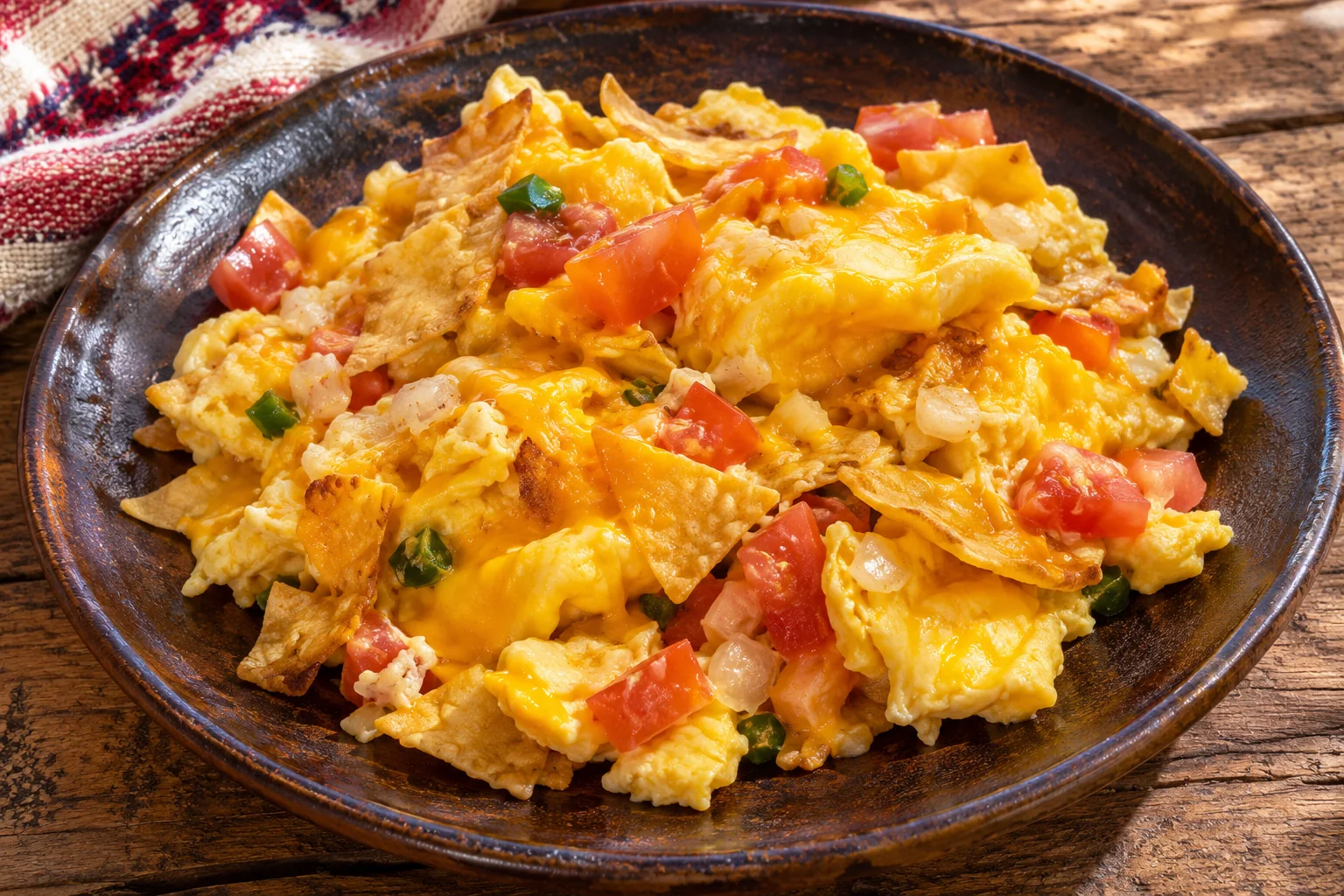
Begin with the breakfast you want to cook
Both recipes combine tortilla pieces, eggs, tomato, onion, chile, and Cheddar. Their ingredient lists and batch sizes differ, and each page gives the complete preparation.
- Migas con Huevo uses chopped tomato and jalapeño. The tortilla pieces begin in the oil, the vegetables follow, and beaten eggs finish the pan with Cheddar.
- Cisco’s Tomato-Serrano Skillet Eggs uses canned peeled tomatoes, garlic, and serrano chiles. Its recovered card required reconstruction of several ingredient amounts, which are identified on the recipe page.
The Migas card also carries the name Migajas. The Cisco-named card originally said Huevos Rancheros, but its written method scrambles eggs with tortilla pieces. The descriptive title on the published page helps you recognize the dish you will make. These two records belong together as a comparison, while keeping their individual measures and methods.
Migas names more than one preparation
The Larousse gastronomic dictionary’s migas entry describes a preparation built from crumbled dry bread, with regional combinations that can include eggs and meat. That entry is a useful reminder to read the ingredients alongside the name.
A different, clearly documented example appears in Mexico’s agriculture ministry’s 2023 Migas con Huevo recipe. It uses corn tortillas, eggs, white onion, serrano, and tomato, with beans and fresh cheese for serving. The fried tortilla pieces join the eggs toward the end. The publication documents a Mexican tortilla-and-egg preparation; it does not date the first pan of migas.
Our two recipes use the tortilla form. Neither their names nor an Austin restaurant association establishes that every dish called migas shares one formula or was invented in one city.
A published variation makes the choices visible
Pati Jinich’s Chilorio Migas combines broken corn tortillas with onion, Anaheim chiles, tomato, eggs, and prepared chilorio. She also uses the name sopitas in the preparation. It is a named cooking example with its own pork ingredient and accompaniments.
Reading that recipe beside the ministry’s example shows why the sequence deserves attention: tortilla pieces can spend different amounts of time with vegetables and eggs. Our Migas con Huevo puts the tortilla into the pan early and adds Cheddar near the finish. The Cisco-named recipe reduces its tomato mixture before the eggs go in. Follow the sequence on the page you choose.
Jinich’s chilorio ingredient belongs to her complete preparation. Our separate Mexican Chorizo story concerns a different group of pork and beef recipes. It offers another breakfast path without adding an ingredient to either skillet recipe here.
What the Austin record can tell us about Cisco’s
A City of Austin survey entry for 1511 East Sixth Street transcribes directory listings from 1957 and 1967 for Cisco Bakery and Coffee Shop, naming Rudolph P. Cisneros as proprietor. This places the business at a specific address in dated records. It does not identify the restaurant’s egg recipe.
Preservation Austin’s Barrio Landmarks guide describes Rudy Cisneros as a civic figure whose restaurant hosted community events and political gatherings. Breakfast was part of a place where people met, alongside the work of running a bakery and restaurant.
The owner’s archived card associates its eggs with Cisco’s. The public records establish the restaurant’s Austin setting, while the recovered card documents this site’s particular preparation. They are different kinds of evidence. The recipe page retains its explanation of the reconstructed amounts, and the story does not present it as an authenticated restaurant formula.
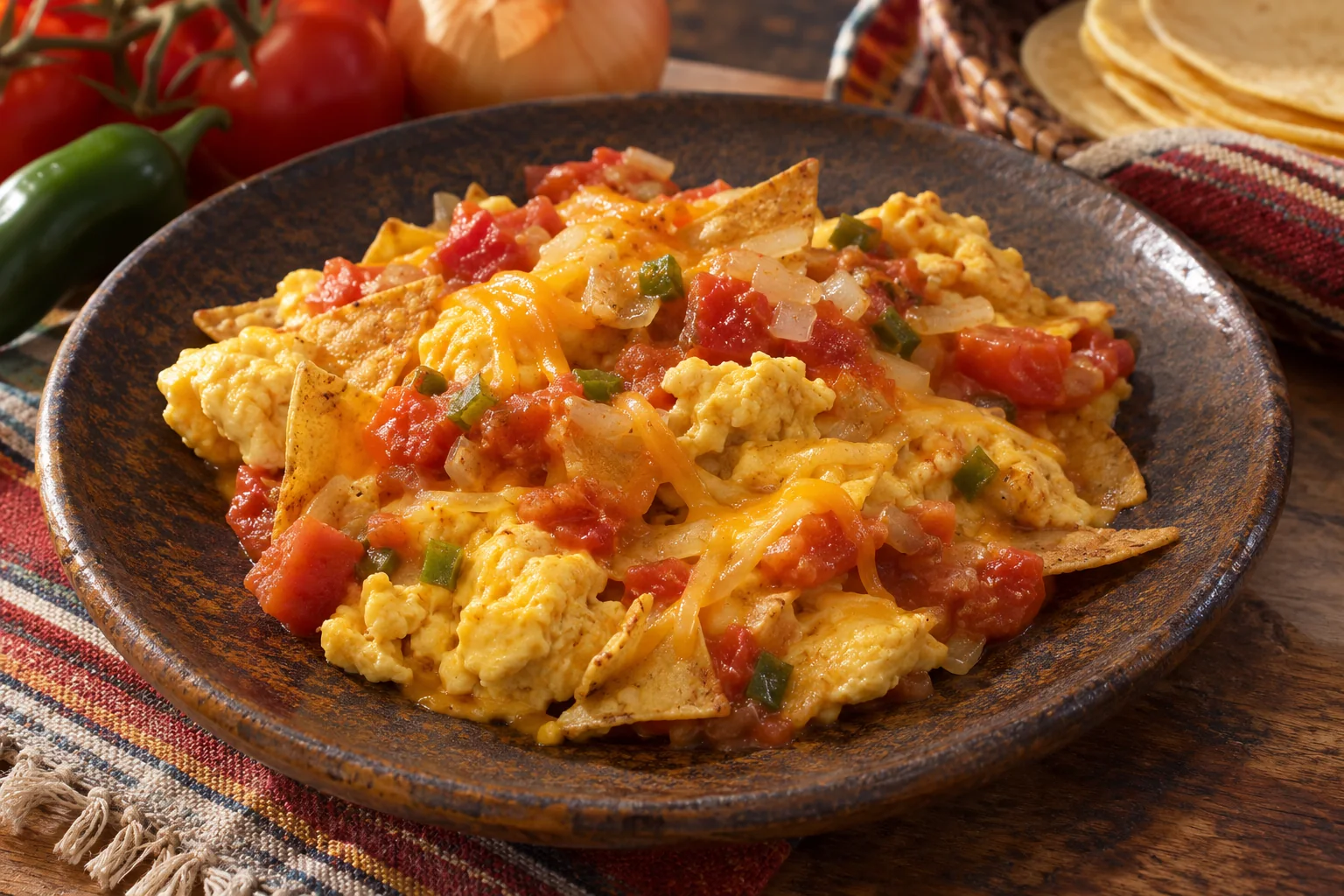
A breakfast can arrive on a plate or inside a wrapper
The restaurant’s published Sixth Street ordering menu lists a migas plate and huevos rancheros separately, and also offers migas as a taco and a biscuit filling. That menu makes several serving forms visible. It does not reveal a complete kitchen formula.
The two recipes on this site are skillet preparations. Their serving notes offer warm tortillas or beans as appropriate, with the cooked egg mixture remaining the main dish. A tortilla used inside a pan and a warm tortilla used to hold a filling have different jobs.
The Breakfast Burrito story follows another serving form and its Santa Fe family account. Comparing the stories helps you choose a plate, taco, or rolled meal without treating those breakfasts as interchangeable histories.
Read the tortilla and the eggs together
The owner’s Migas card calls for small tortilla pieces that begin to crisp but remain part of a soft egg dish. Its vegetables meet the tortilla before the eggs. The Cisco-named card starts with canned tomatoes and asks the cook to reduce excess liquid before scrambling. The amount of moisture entering the egg stage is therefore a useful difference to notice.
Both pages describe gentle movement of the eggs and a melted-cheese finish. Their written cues give the cook more information than color alone. Use each complete method for its timing and endpoint, keeping the two ingredient lists separate.
The corn-tortilla guide explains the foundation inside these skillets. For the separate warm wrapper offered in the serving notes, follow the flour-tortilla guide or the Homemade Flour Tortillas recipe.
Cook the breakfast, then follow its place
Choose Migas con Huevo or Cisco’s Tomato-Serrano Skillet Eggs. Follow the Austin atlas for East Austin’s neighborhood history, food businesses, and heritage work.
The Refried Beans story leads to two complete bean preparations for a separate side. The Chorizo story and Breakfast Burrito story offer related reading, each with its own recipes and documented places.
Sources for the Migas and Cisco’s story
- Larousse Cocina: Migas — the dictionary’s bread-based preparation and regional range.
- Secretaría de Agricultura y Desarrollo Rural: Migas con Huevo, 9 April 2023 — a published corn-tortilla-and-egg example.
- Pati Jinich: Chilorio Migas — a separately published tortilla, egg, and prepared-pork variation.
- City historic-resources survey, HHM ID 11221, Volume IV, Appendix C, printed pp. 65–66 — address and directory evidence; the history is on PDF page 77.
- Preservation Austin: East Austin’s Barrio Landmarks, Cisco’s entry — the civic and neighborhood account.
- Cisco’s Sixth Street menu — serving names checked for this article; menus can change.
The two recipe pages identify their own source records. A restaurant history or menu does not establish an inventor for migas or authenticate the owner’s archived formula.