Food Stories · Chile, spice & the Dallas table
Mexican Chorizo: Pork, Beef, and the Dallas Table
Three red-seasoned chorizo recipes open a wider story: a Mexican sausage tradition with regional differences, a dated El Chico cookbook, and a Dallas family business whose records survive in public archives.
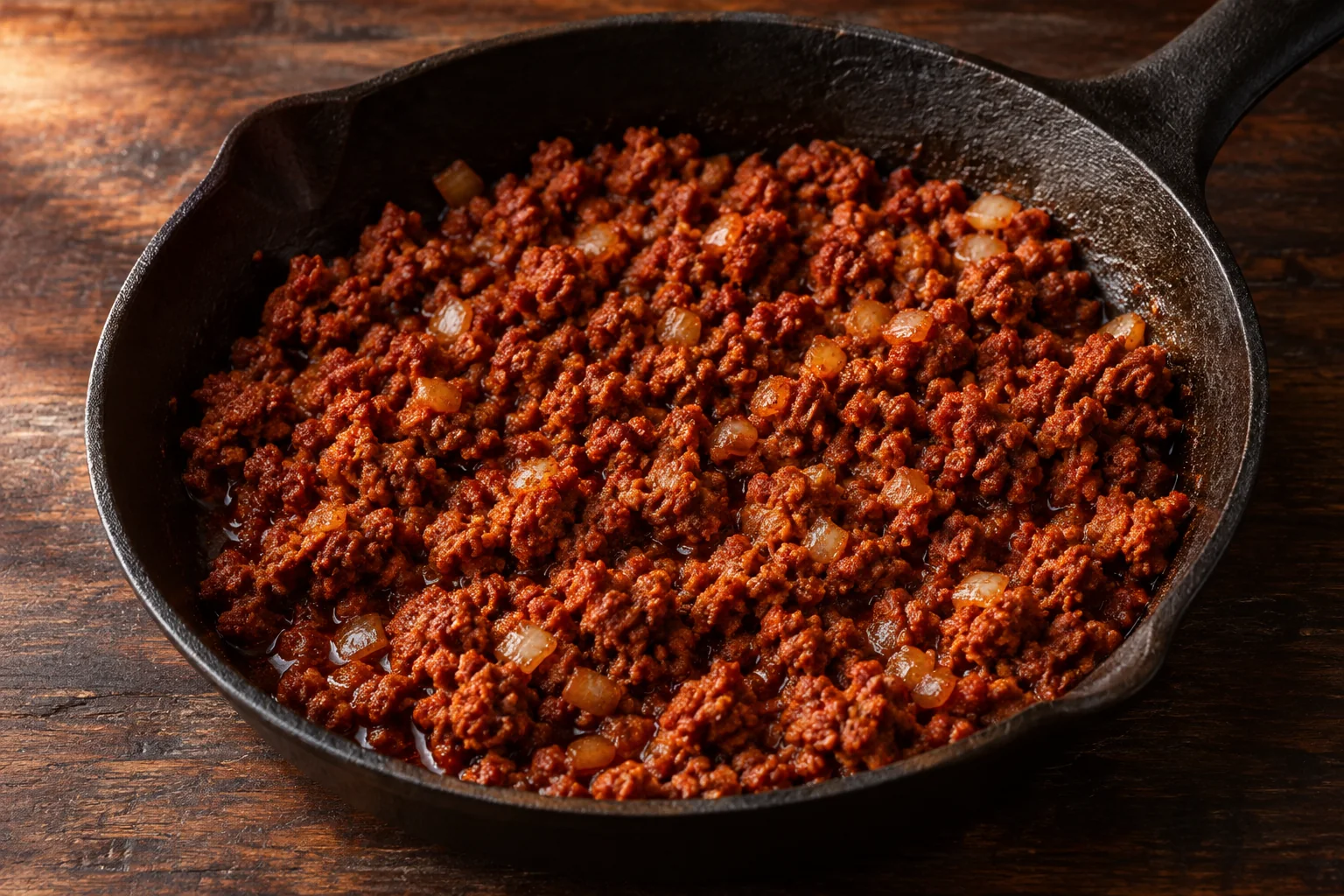
Choose the meat and the preparation
The three complete recipes on The Border Table share chile, paprika, cumin, garlic, and vinegar. Their differences are worth reading before you begin.
- Mexican Pork Chorizo mixes ground pork with powdered seasonings, vinegar, and chopped onion. The onion goes into the mixture with the meat. The recipe is kept loose and cooked as crumbles.
- Mexican Beef Chorizo follows the same seasoning proportions with ground beef. It is a useful companion when choosing between the two meats; the complete page supplies its own cooking instructions.
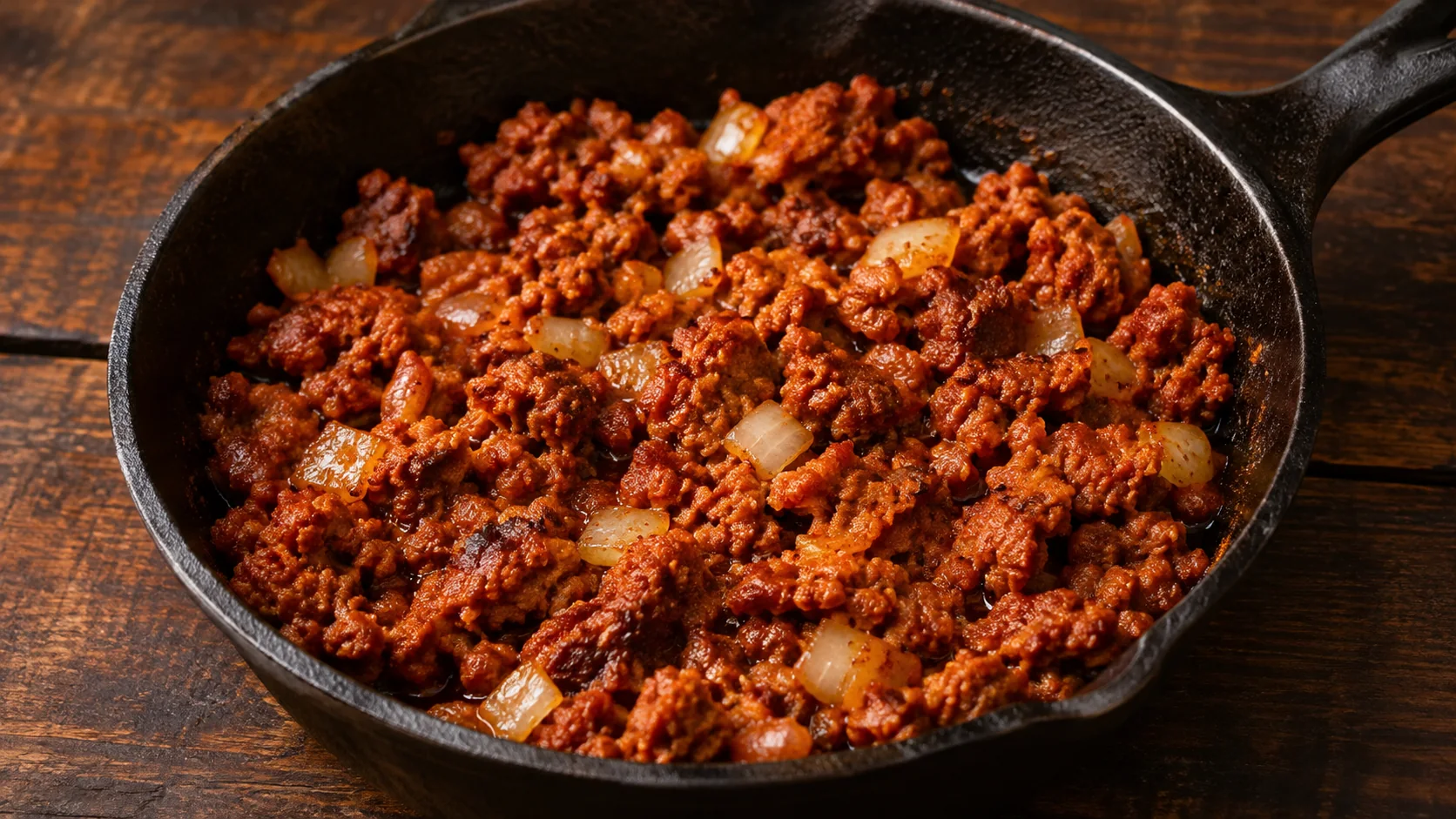
- El Chico-Style Chorizo begins with pork chops pulsed coarsely with the seasonings and red-wine vinegar. The chopped onion is cooked separately in oil before the seasoned pork is added.
The half-pound El Chico-style preparation has its own proportions and sequence. It is not simply the larger pork recipe divided into smaller portions. All three come from the owner’s 2021 recipe archive; the individual pages identify their sources and provide the quantities and methods.
A sausage tradition takes on Mexican ingredients
The Larousse Mexican culinary dictionary describes chorizo through chopped pork, seasonings, chile, and vinegar, and explains the Mexican adaptation of a sausage tradition brought from Spain. It also records substantial regional differences in flavor, color, and size.
That range matters when reading the name on a recipe. “Chorizo” does not identify one universally fixed mixture. These three pages describe fresh meat preparations that need cooking. A ready-to-eat cured sausage is a different product, and its handling instructions cannot be carried over to these mixtures.
The beef version here is documented by the owner’s archived card. That is the evidence for including it beside the pork recipes. It does not need an invented birthplace or a claim that beef defines one particular Mexican region.
Toluca makes regional variety visible
The municipality of Toluca’s gastronomy account presents chorizo as an emblem of the city, including its familiar red and green forms. This is a strong connection between a place and a food, without establishing that every Mexican chorizo originated there.
Andrea Edurne Jiménez-Ruiz and colleagues describe another aspect of that relationship in their chapter on university and producer collaboration: work around the Feria del Chorizo Artesanal in the Toluca Valley. Their account treats the food as a local product and a focus of heritage work, involving the people who make it.
A published cooking example gives the green form a closer view. Rick Bayless’s Green Chile Chorizo Tacos uses pork with green chiles and herbs in his own preparation. It illustrates a different flavor and color family. Our three recipes remain the red-seasoned preparations recorded on their pages.
A printed connection: the El Chico cookbook of 1977
The El Chico Cookbook, published by El Chico Corporation in 1977, provides a specific comparison. Printed page 14 contains a pork-chorizo recipe whose eight ingredients, quantities, and six-serving yield correspond to the archived Mexican Pork Chorizo card on this site. The following page includes chorizo with eggs.
This is evidence of a matching printed ingredient list. It does not establish how the owner obtained the later card or authenticate a present-day restaurant formula. The separately named El Chico-Style Chorizo page uses a different preparation. Its “style” wording preserves that distinction.
El Chico belongs in the Dallas restaurant story
UNT Libraries’ collection essay places the Cuellar brothers’ Dallas restaurant venture in 1940. Their family business adds a distinct thread to a city food history that also includes El Fenix and tortilla making.
The Smithsonian’s El Chico Collection guide describes company and family records, menus, product packaging, advertising, and financial material. Those surviving records let the story extend beyond a restaurant name to the work of operating and presenting a food business.
The Cuellar family’s El Chico history and the Martinez family’s El Fenix history belong to separate businesses. Follow both in the Dallas atlas, alongside the neighborhood, tortilla, menu, and frozen-Margarita chapters. The cookbook is one dated kitchen record within that larger restaurant landscape.
Read the grind, the onion, and the cooking step
The pork and beef cards make a direct comparison possible: their listed seasoning proportions are the same, while the meat changes. The El Chico-style card asks for a coarser starting texture and treats the onion differently. These are concrete choices in the recipes, rather than rules for every chorizo.
Ground cumin appears in all three. Paprika and chile powder also belong to the recorded mixtures, while vinegar supplies their acidic seasoning. Follow the particular recipe’s ingredient list; a green chorizo example or another cook’s dried-chile preparation is a comparison, not an instruction to replace that list.
Keep these fresh meat mixtures refrigerated until cooking. The federal minimum-temperature chart specifies 160°F (71°C) for ground pork and ground beef, including sausage. The three recipe pages already use that endpoint. Check with a food thermometer; red seasoning is not a doneness test. Adding vinegar does not turn a fresh meat recipe into a shelf-stable or ready-to-eat sausage.
Follow the chorizo to the table
The Queso Flameado story connects chorizo with melting cheese and the hot serving dish. Its complete Queso Flameado recipe has its own chorizo quantity and cooking sequence. Use that method when making the casserole.
Choose Mexican Pork Chorizo, Mexican Beef Chorizo, or El Chico-Style Chorizo for the sausage itself. Continue through the Dallas atlas for the archival connection, or return to the cumin guide to follow one shared seasoning.
Sources for the Mexican Chorizo story
- Larousse Cocina: Chorizo — culinary definition, adaptation, and regional variety.
- Municipality of Toluca: Gastronomía — the city’s own account of its red and green chorizos.
- Jiménez-Ruiz and colleagues, “Vinculación territorial como herramienta de valorización del chorizo artesanal de Toluca” — the authors’ abstract on producer collaboration and the fair.
- Rick Bayless: Green Chile Chorizo Tacos — a named contemporary green-chorizo preparation.
- El Chico Cookbook, 1977, printed pp. 14–15 — digitized by UNT; the matching pork ingredient list and the neighboring egg preparation.
- UNT Libraries: El Chico’s Humble Beginning, 2014 — the Cuellar family’s Dallas business history.
- Smithsonian: El Chico Collection, NMAH.AC.1246 — the scope of the business and family archive.
- FoodSafety.gov: Safe Minimum Internal Temperatures — ground-meat cooking endpoints.
The recipe pages retain their individual source notes. Regional history and a cookbook correspondence do not establish one inventor, an official restaurant endorsement, or an unchanged formula across generations.