Food Stories · The Border Table
Elote: An Ear of Corn at the Street-Food Table
The corn matters as much as its toppings. Begin with the tender ear, then follow the relationship between field, market, vendor and the dish you grill at home.
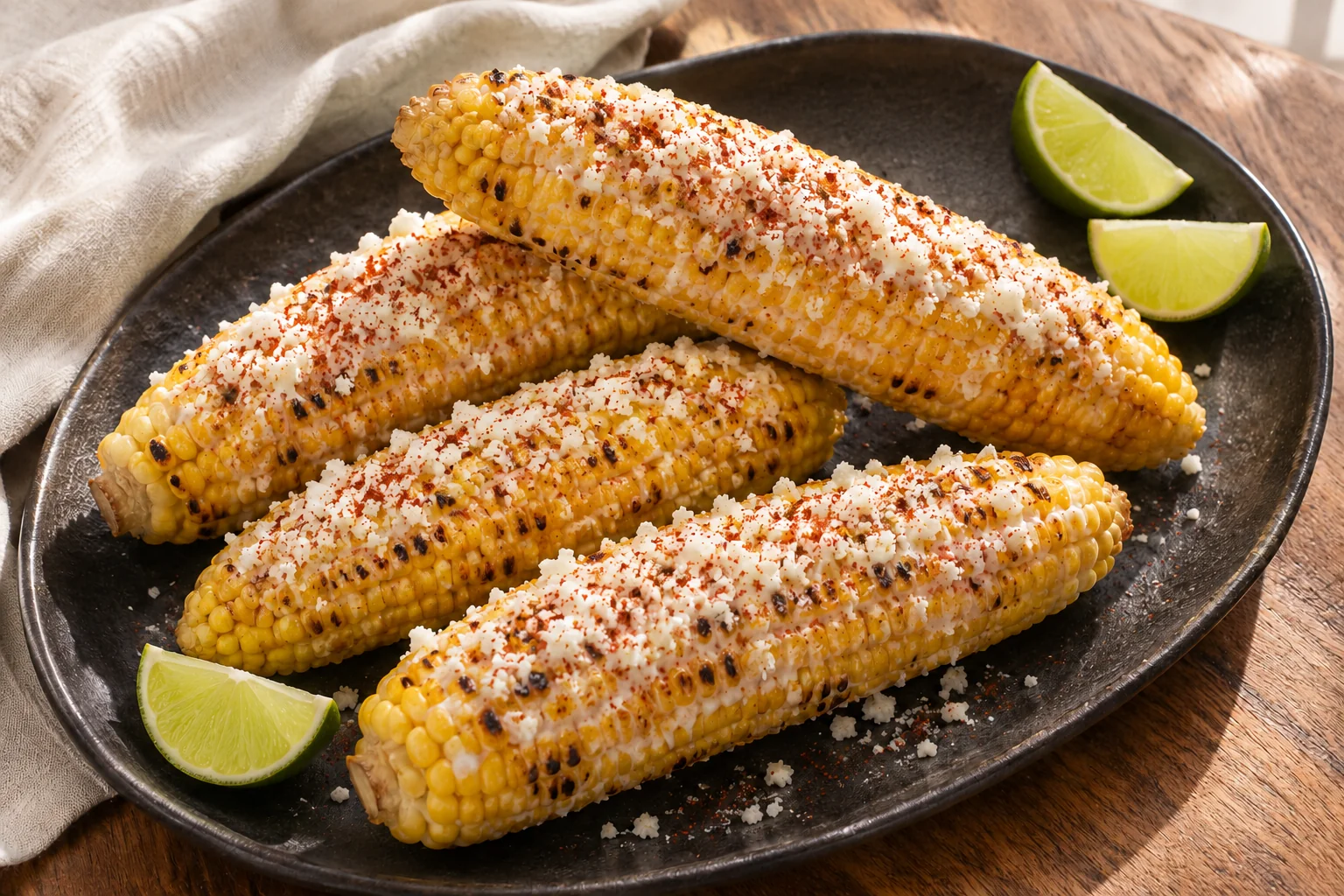
An ear, a kernel and a different way of eating
Elote brings the corn to your hand still attached to the cob. Esquites shift the meal to kernels and a spoon. In Rick Bayless’s account of vendor-style corn, he distinguishes Mexico’s young field corn from the sweeter and more tender ears commonly available in the United States. That difference belongs in the cooking instructions, not only in the story.
Our Elote recipe is written for sweet corn. It uses a short grill and a thin coating, leaving the kernels visible. A different maize variety may need a different cooking time; a familiar garnish cannot make the starting ingredients identical.
Maize is more than one product
Agricultura’s account of cacahuacintle describes maize used for roasted or boiled ears, esquites, tamales and pozole. These names point to different forms and treatments of a crop. The grain in a bowl of hominy is not a replacement for the fresh kernels on an ear.
Follow the Corn Tortilla story to see another transformation: nixtamalized grain becomes masa, then a thin round on the comal. The Michoacán atlas places maize beside farmers, cooks and community knowledge.
Keep the vendor and the market in view
Secretaría de Turismo’s market account follows producers, merchants, cooks, prepared foods and kitchen tools. Its Milpa Alta example includes separate stalls for grain, masa, tortillas and foods ready to eat. Those connections help explain a food table without reducing it to one famous snack.
Explore Mexico City through those agricultural and market connections. This is a setting in which to learn about ingredients and food selling, rather than an assertion that the elote-and-topping combination was invented in one city.
Put the contrast on your own table
Use just enough dressing for the cheese and chile to cling, then squeeze the lime when you are ready to eat. The warm corn, cool coating, salty cheese and fresh acidity have separate jobs. More of every topping is not required to make those contrasts noticeable.
Cook the four-ear recipe beside Carne Asada Tacos, or read the cheese and crema guide before choosing the finishing ingredients.
Sources and further reading
- Rick Bayless: Grilled Corn on the Cob with Street Vendor Garnishes — Field-corn/sweet-corn distinction and garnish comparison; this recipe grills husked ears with different proportions.
- Secretaría de Agricultura: Maíz cacahuacintle — Different culinary uses and forms of maize.
- Secretaría de Turismo: Los mercados de México — Named markets, ingredients and their cooks and merchants.
Have a source or cooking detail to add? Send a correction.