Food Stories · The Border Table
Chili con Carne: A Bowl of Red and a Wider Texas Record
Beef and chile give one familiar Texas bowl its structure. Dated cookbook records show that the larger history contains different choices about meat, beans and vegetables.
Read the record before choosing sides
UT San Antonio Special Collections presents a meat-and-spice chili, then follows it with a different preparation in its next article. That second example comes from Arthur and Bobbie Coleman’s The Texas Cookbook of 1949, printed pages 72–73. It includes chopped beef, tomatoes, green pepper and cooked beans.
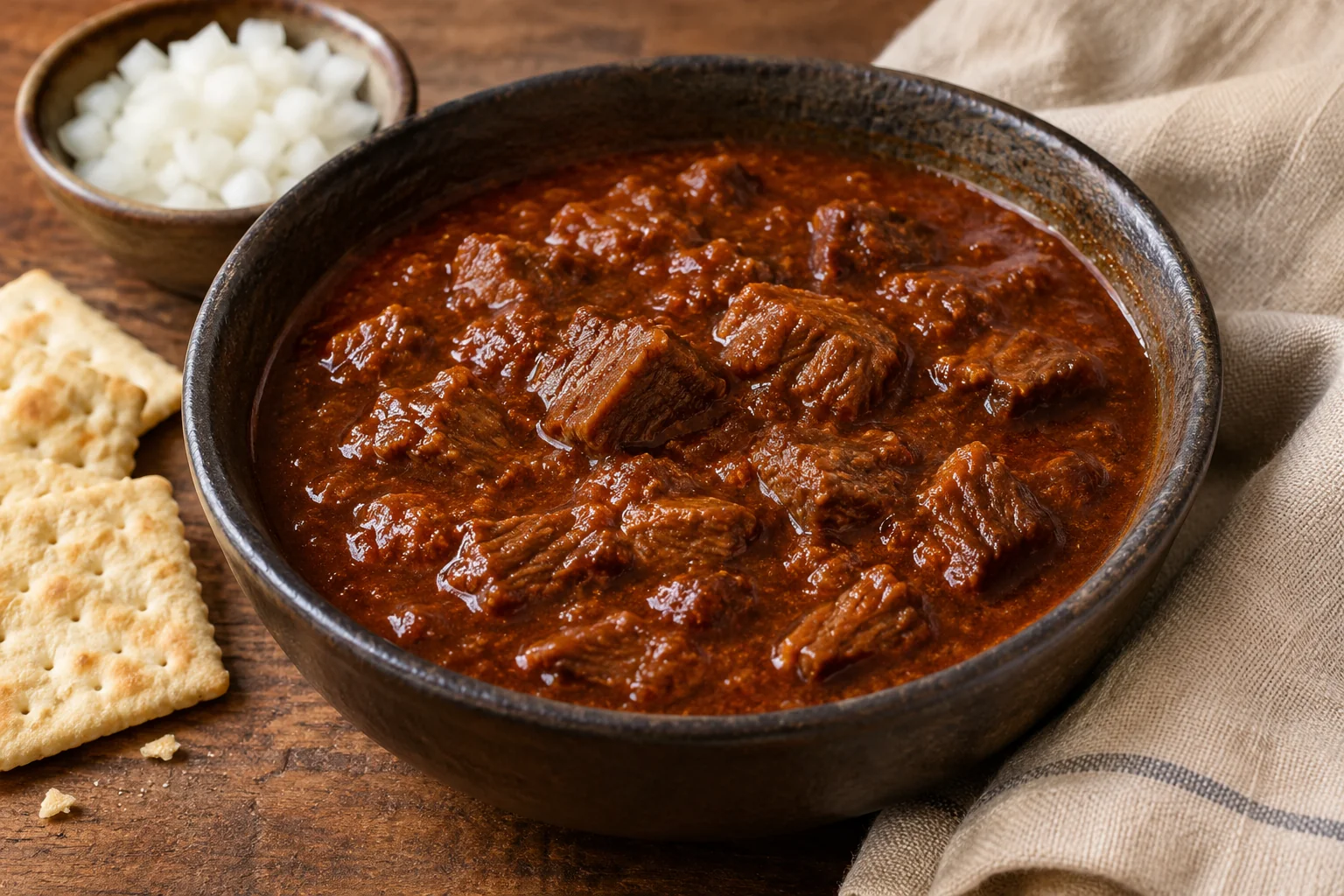
Those dated examples are useful precisely because they differ. A present-day preference for a beef-and-chile pot should not erase a printed bean-containing recipe from the record. Our Chili con Carne makes its own choice: chuck, dried chiles and a little masa harina, with no beans or tomatoes in the pot.
San Antonio gives the bowl a public setting
The Handbook of Texas food account places Tex-Mex within the state’s changing regional food traditions. Explore the San Antonio atlas for plaza meals and the people selling and seasoning food.
This history is larger than a competition rule or a modern pantry packet. A cookbook tells us what a named writer recorded at a particular time. A plaza account tells us something different about public meals and livelihoods. Read the two together without expecting either to prove one undisputed invention.
The cut determines the cooking
Chuck roast needs time in liquid to become tender. A quick-cooking steak or ground beef would change the method and timing, so the recipe names its cut before asking you to brown it. The chile mixture must remain fluid enough for that braise; a finished thick gravy belongs at the end.
Read the ancho and guajillo guides before shopping. They help distinguish the actual dried chiles from spice blends whose salt and other seasonings vary.
Put the rest of the table alongside
Serve Charro Beans separately when you want whole beans and broth with the meal. The Nuevo León atlas opens another northeastern Mexican table and its distinct preparations; it is a comparison, not an origin claim for this chili.
Return to the complete recipe for the browning, braise and final thickening. Its exact ingredient list keeps this preparation distinct from the 1949 example and from the owner’s separate Carne Guisada.
Sources and further reading
- UT San Antonio Special Collections: October is Chili Month — A documented meat-and-spice comparison.
- UT San Antonio Special Collections: Chili con Carne 1949 — Arthur and Bobbie Coleman’s 1949 recipe, pp. 72–73, as a contrasting historical preparation.
- Texas State Historical Association: Tex-Mex Foods — Regional context and San Antonio’s public food table.
Have a source or cooking detail to add? Send a correction.