Food Stories · The Border Table
Pozole Rojo: Maize, Broth, and the Fresh Finish
Large kernels and a red broth make a recognizable bowl, but the name covers more than one route. Look closely at the maize, the chiles and the toppings.
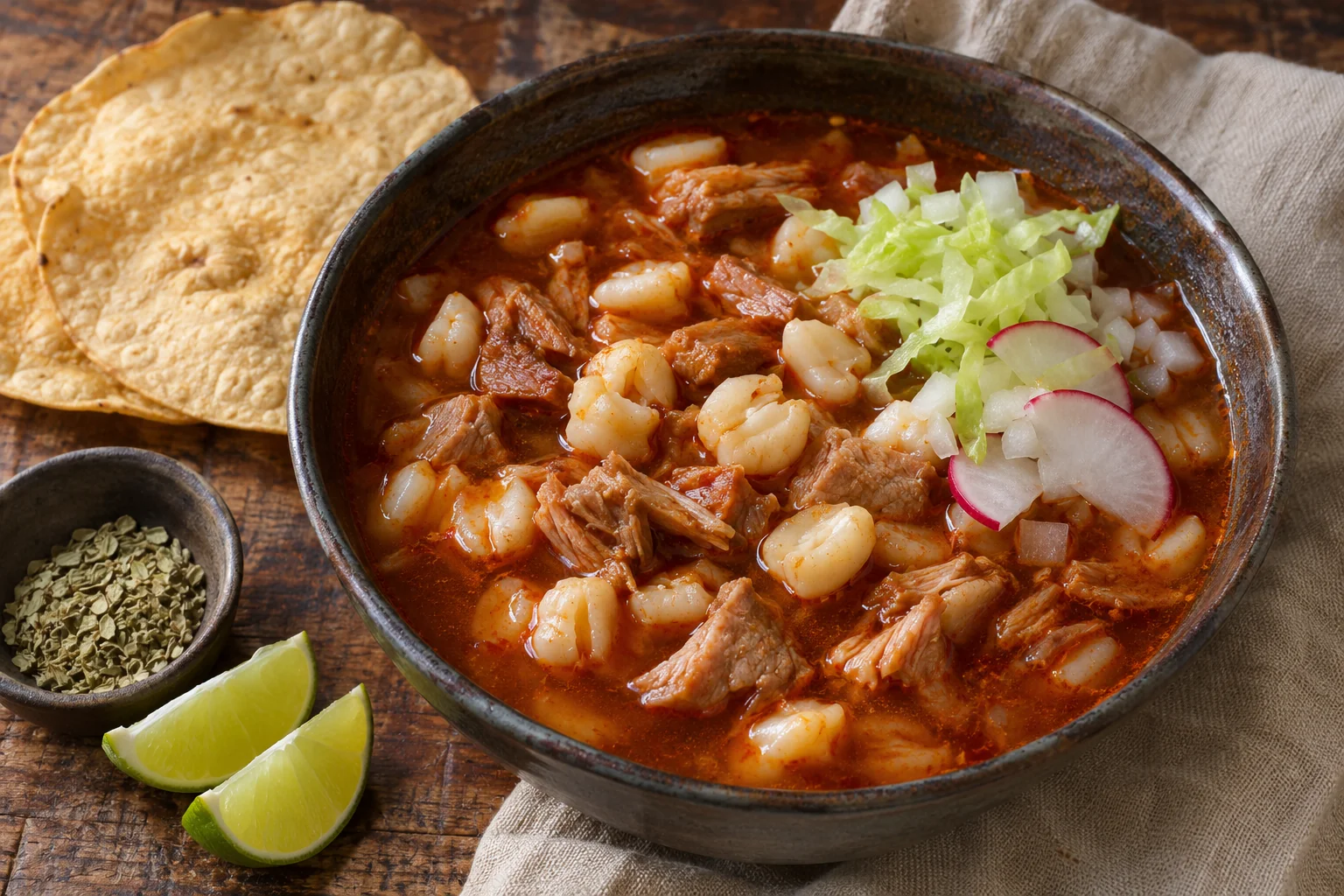
The red can come from different places
In Ricardo Muñoz Zurita’s pozole account, red does not identify one single formula. He distinguishes a white pozole colored at the table with a red salsa, a Pátzcuaro-area preparation using red maize, and versions in Jalisco colored with guajillo or ancho.
Our Pozole Rojo follows the last color principle: white hominy in a red-chile broth. It uses canned cooked hominy and boneless pork shoulder for a home pot. Those starting ingredients are specified so you can plan the cooking accurately.
Read the maize before starting the broth
Agricultura’s account of cacahuacintle identifies its large grain and uses that include pozole, ears, esquites and other foods. Maize reaches the kitchen in several forms. A can of cooked hominy, a bag of dried pozole maize and a package of masa harina need different work.
The convenience in this recipe is already-cooked hominy. Adding dry grain at the same stage would leave the cooking incomplete. Read the package rather than assuming that every product with maize on the label is ready for the final half-hour of simmering.
The place is larger than the bowl
Continue through Jalisco for regional dishes beyond birria, and through Michoacán for maize, lake foods and community knowledge. These pages put the comparisons into their own landscapes.
A regional preparation is not proof of a single inventor. Nor does the broad antiquity of maize cooking establish the exact age of today’s pork, chile and garnish combination. Keep the present recipe and the historical questions close, without turning one into unsupported evidence for the other.
Finish at the table
The cooked bowl and its raw additions do different jobs. Radish and lettuce stay crisp, onion adds its own pungency, and lime supplies acidity. Oregano can be crumbled between your fingers over an individual serving instead of disappearing into a large simmering pot.
Use the complete recipe for the pork and broth. The Mexico City atlas offers another market and serving setting, while the Tostada story follows the crisp tortilla you might eat beside a bowl.
Sources and further reading
- Ricardo Muñoz Zurita / Larousse Cocina: Pozole rojo — Red pozole variations, regional comparison and garnish choices; this version uses canned cooked hominy and pork shoulder.
- Secretaría de Agricultura: Maíz cacahuacintle — Maize used for pozole and other preparations.
- FoodSafety.gov: Four Steps to Food Safety — Cooling and cold-storage guidance.
Have a source or cooking detail to add? Send a correction.